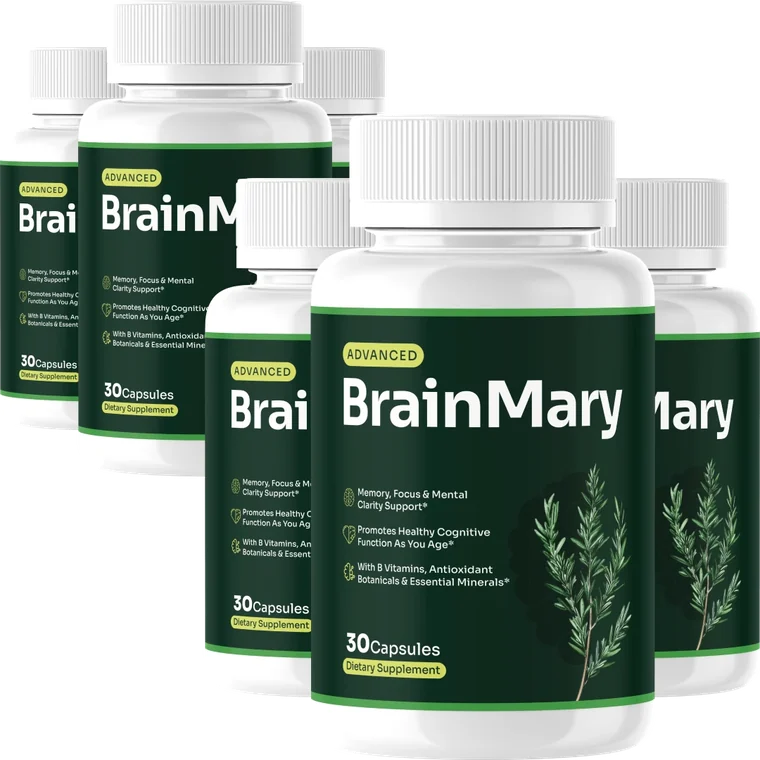
BrainMary Ingredients
BrainMary's commonly cited formula includes Bacopa monnieri, Ginkgo biloba, Phosphatidylserine, Huperzine A, N-Acetyl L-Carnitine and B-vitamins.
The evidence varies a lot by ingredient, dosing isn't clearly published, and some versions may include St. John's Wort, which interacts with many medications.
Six ingredients, with honest evidence notes
Below is the most commonly described BrainMary formulation. For each ingredient we note not just what it is meant to do, but how strong the actual research is — because they are not all equal.
Bacopa monnieri
The most researched herbal ingredient in the formula. Multiple randomized trials suggest it may support memory and learning, but consistently only after roughly 8 to 12 weeks of daily use — it is a genuinely slow-building ingredient, not a quick fix. This is arguably the strongest single-ingredient evidence in the formula.
Ginkgo biloba
One of the most extensively studied botanicals for circulation and cognition. Here honesty matters: despite its popularity, large trials (including the major GEM study on dementia prevention) have produced mixed and often disappointing results, so it should be viewed as plausible support rather than established benefit.
Phosphatidylserine
A phospholipid that is a genuine structural component of brain-cell membranes. It has some supportive research for age-related cognitive concerns, though high-quality trials are limited in number.
Huperzine A
A compound that inhibits acetylcholinesterase, the enzyme that breaks down the memory-related neurotransmitter acetylcholine. It has real pharmacological activity, which is also why dosing and medical guidance matter — it is not a trivial ingredient.
N-Acetyl L-Carnitine
An amino acid derivative studied for mitochondrial energy production in brain cells and for mental energy, with some supportive research particularly in older adults.
B-Complex Vitamins
Essential cofactors for nervous-system function and neurotransmitter synthesis. Correcting a genuine B-vitamin shortfall can support cognition; taking extra beyond adequate levels is less clearly beneficial.
The St. John’s Wort question
Some independent reviews note that certain versions of this formula include St. John’s Wort. This is worth singling out because it interacts with a genuinely long list of medications — antidepressants, blood thinners, birth control pills and more. If any label you are looking at lists it, a conversation with your doctor or pharmacist is essential before use.
The dosing unknown
The other honest limitation: published ingredient amounts are not clearly disclosed in the materials we reviewed. Even well-researched ingredients only work at effective doses, so without that information it is hard to know whether the formula matches the doses used in the supporting studies.